Trump Issues Nuclear Ultimatum to Iran as U.S. Warships Mass in Gulf: What It Means for Canada and Global Security
By Kevin J.S. Duska Jr. | January 28, 2026
Reading Time: 3 Minutes
Donald Trump has issued his starkest warning yet to Iran, declaring that “time is running out” for a new nuclear agreement as the United States rapidly expands its military presence across the Persian Gulf and surrounding region.
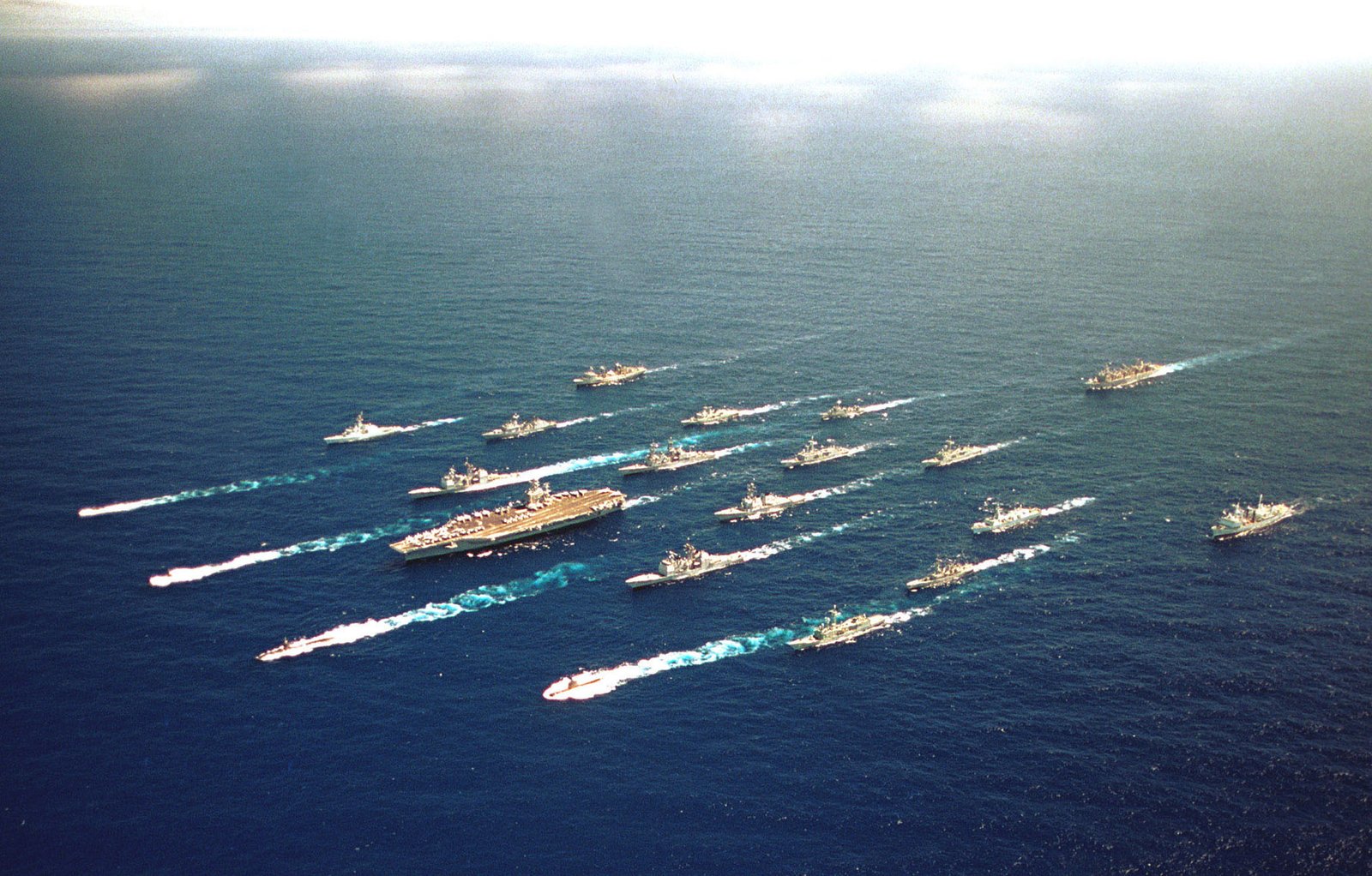
The U.S. president said a “massive armada” led by the aircraft carrier USS Abraham Lincoln is now positioned near Iran, backed by fighter aircraft, surveillance drones, refuelling planes, and guided-missile destroyers spread across Jordan, Bahrain, Qatar, Oman, and the Indian Ocean.
While Washington frames the deployment as deterrence, Tehran sees it as coercion.
Iran’s foreign minister, Abbas Araghchi, responded that Iran’s armed forces are “on trigger alert” and prepared to retaliate “by land or sea” against any attack. Iranian officials again insisted their nuclear programme is peaceful, rejecting U.S. accusations that Tehran is seeking nuclear weapons.
For Canada — a G7 nation, NATO ally, and long-time supporter of nuclear non-proliferation — the confrontation presents a dangerous escalation that threatens global energy markets, international security norms, and Canada’s own diplomatic and economic interests.
A Gulf Military Buildup Unlike Anything Since Iraq
Open-source satellite imagery and flight-tracking data confirm a major U.S. force surge:
- At least 15 fighter jets arrived at Jordan’s Muwaffaq Salti Air Base
- Additional aircraft deployed to Qatar and Diego Garcia
- Dozens of cargo and refuelling planes tracked across the region
- Surveillance drones and P-8 Poseidon spy aircraft operating near Iranian airspace
- Two guided-missile destroyers and three combat ships docked in Bahrain
- USS Abraham Lincoln positioned offshore in the Gulf
Iran has responded by deploying its new drone carrier IRIS Shahid Bagheri just off its coast, signalling it will not retreat under pressure.
Risk analysts say the scale of deployment marks a dramatic shift.
“The U.S. has significantly increased its regional posture in just two weeks,” said Megan Sutcliffe of Sibylline. “This is no longer symbolic.”
The Nuclear Flashpoint
At the heart of the crisis is Iran’s nuclear programme — and the collapse of the 2015 nuclear agreement after Trump withdrew from it in 2018.
Under that deal, Iran was:
- Limited to 3.67% uranium enrichment
- Banned from enrichment at Fordo
- Subject to international inspections
After U.S. sanctions returned, Iran began breaching those limits. American officials now demand that Tehran:
- End uranium enrichment
- Restrict missile development
- Cut ties with regional proxy groups
Last year, U.S. strikes targeted Iranian nuclear facilities at Fordo, Natanz, and Isfahan. Washington claims the operation crippled Iran’s weapons potential. Iranian officials say critical materials had already been removed.
Iran later retaliated with missile strikes on a U.S. base in Qatar.
Why This Matters for Canada
Canada may not be deploying warships, but it is far from insulated.
1. Energy Security
Roughly 20% of the world’s oil passes through the Strait of Hormuz. Any conflict could spike global fuel prices — directly affecting Canadian households, transportation, food costs, and inflation.
2. NATO and Arctic Strategy
Canada’s military partnerships with the U.S. and NATO place it within the strategic consequences of any Gulf conflict, including:
- Pressure to align with U.S. policy
- Expanded intelligence sharing
- Increased Arctic security coordination if global tensions widen
3. Non-Proliferation Norms
Canada has historically supported nuclear arms control. The collapse of the Iran deal weakens international frameworks Canada relies on to manage emerging nuclear threats.
A World on the Edge
Trump says the military force is “ready, willing, and able” to act if Iran does not negotiate. Tehran says it will not submit to threats.
Between them lies a narrow diplomatic window — and enormous risk.
For Canada, the message is clear: instability in the Middle East no longer stays regional. It moves energy markets, reshapes alliances, and raises the stakes of global conflict — even for countries thousands of kilometres away.
The next decision from Washington or Tehran could send shockwaves far beyond the Gulf.


1 comment
[…] continue under a foundation as an open-source project. What foundation governance means for the security architecture — whether it accelerates hardening or introduces a new coordination gap during the transition — […]